Banjul added The Gambia’s voice to 100 dialogues across 100 cities, feeding ideas into the Global Peace Charter.
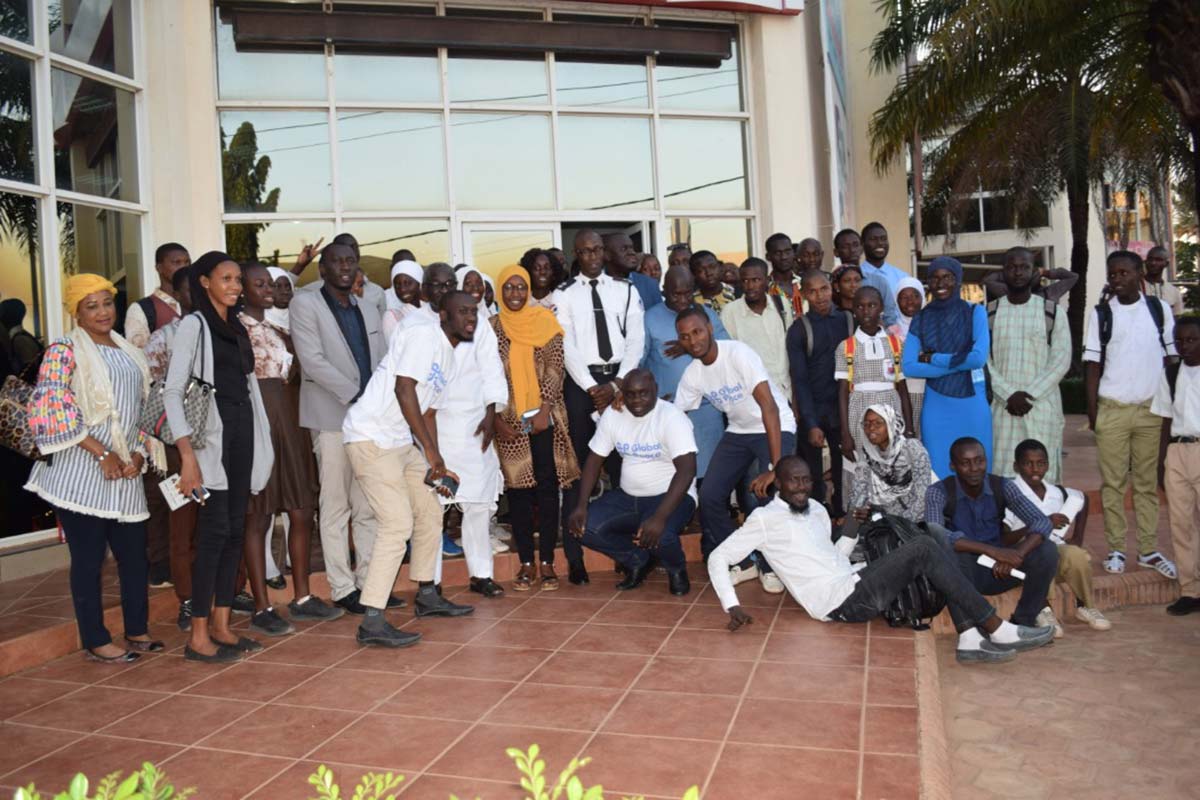
On 31 October 2019, Global Peace hosted an Inter-Generational Dialogue (IGD) in The Gambia at the American Corner, Banjul. The dialogue was attended by youth, academia, government and the private sector, ready to engage on key global challenges being faced.
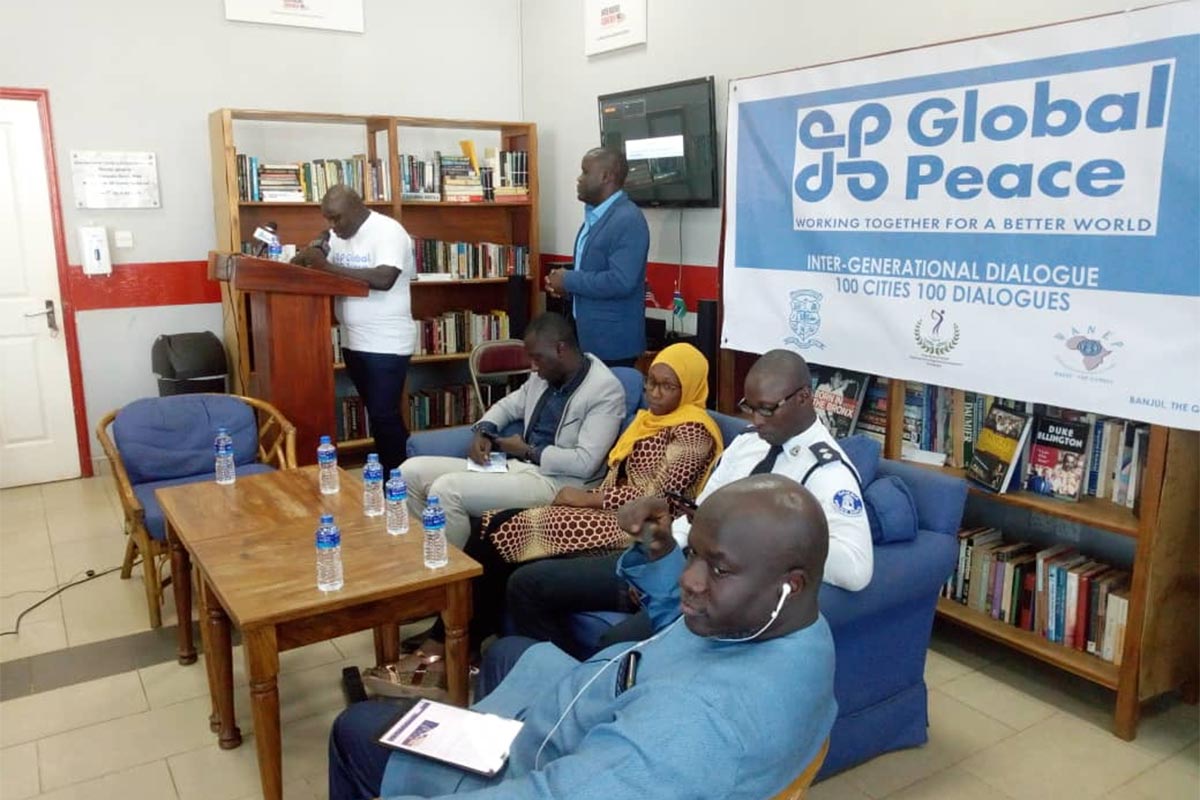
The IGD forms part of the Global Peace campaign of convening 100 Dialogues across 100 Cities to serve as a catalyst for creating social compacts between governments, the private sector and civil society. Inputs gathered from dialogues held globally will be officially catalogued in the Global Peace Charter, which is planned to be presented to the United Nations during its 75th Anniversary in 2020. The dialogue was convened by Mr Buba Fatty, Accountant, Gambia Press Union and facilitated by Mr Sheriff Bojang Jr, Communications Consultant and President of the Gambia Press Union. The panel consisted of Mr Madi Jobarteh, Country Representative, Westminster Foundation for Democracy, The Gambia, Mrs Mariama Jammeh, Programme Assistant, Democracy and Governance, WANEP; Mr Lamin Darboe, Executive Director, National Youth Council, The Gambia, Ms Fatoumatta J. Jallow, Vice President, University of The Gambia Student Union, Hon. Halifa Sallah, National Assembly Member, Serekunda Central Constituency, The Gambia and Asp Lamin Njie, Public Relations Officer, The Gambia Police Service.
The panel addressed a multitude of themes such as the environment, education, citizenship, migration, access to information, climate change, and nuclear weapons. The aforementioned themes were highlighted by the panel as key contributing factors to the global challenges facing the world. The speakers also addressed questions and concerns posed by the audience. This included commentary on a multitude of issues ranging from the necessity of transparency of information from the government of The Gambia, to free education for its citizens, to the education system’s syllabus incorporating entrepreneurship to encourage future economic growth and the growing tribal differences within The Gambia. Key outcomes emanating from the discussions, and as identified by audience and speakers, included a vision of a world free of war and inequality, with young people having universal access to education, as crucial to sustainable national development.
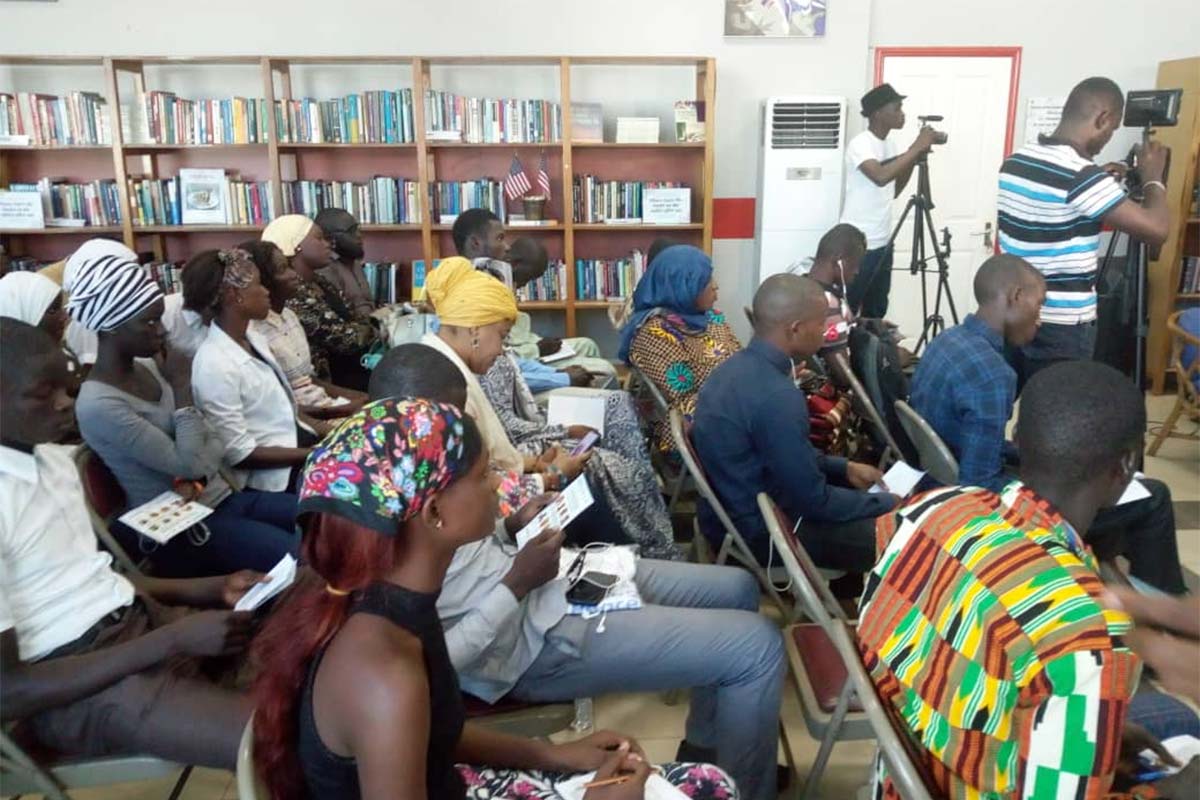
In concluding the discussions, attendees expressed their interest in convening more IGDs across The Gambia in 2020. We look forward to seeing the impact that the IGD has had in contributing to peace processes throughout The Gambia, and we look ahead to our next IGD in the country.