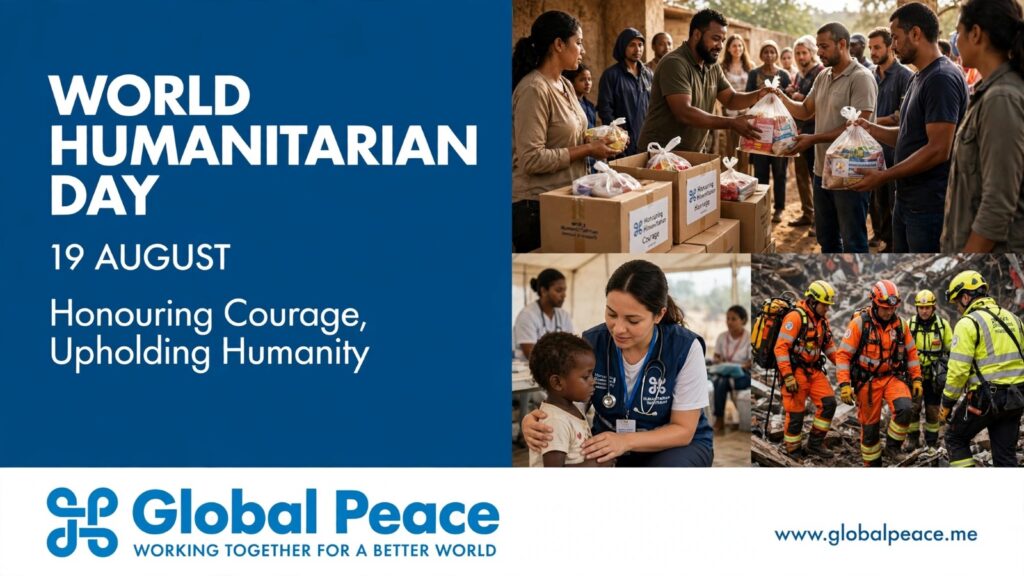
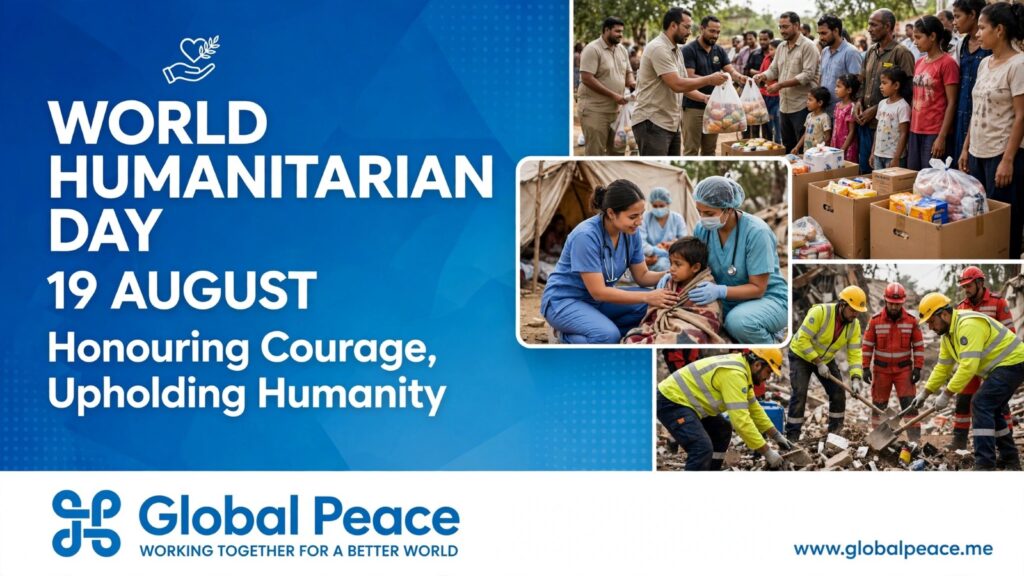
Every year on 19 August, the world pauses to observe World Humanitarian Day. It is not a day of celebration, but a day of profound remembrance, recognition, and recommitment to one of the most fundamental human principles: that even in the darkest moments of conflict, disaster, and despair, we must never forget our shared humanity.
Why 19 August: The date carries a painful history. On 19 August 2003, a truck loaded with explosives was deliberately driven into the Canal Hotel in Baghdad, Iraq, which served as the United Nations headquarters. The brutal attack killed 22 people, including the UN Special Representative in Iraq, Sergio Vieira de Mello, a brilliant diplomat who had dedicated his entire life to alleviating human suffering in some of the world’s most difficult crises.
Five years later, in 2008, the United Nations General Assembly designated 19 August as World Humanitarian Day to honour all humanitarians who have lost their lives in the line of duty, and to honour all those who continue to risk everything to help others, no matter who they are or where they come from.
What is a Humanitarian?
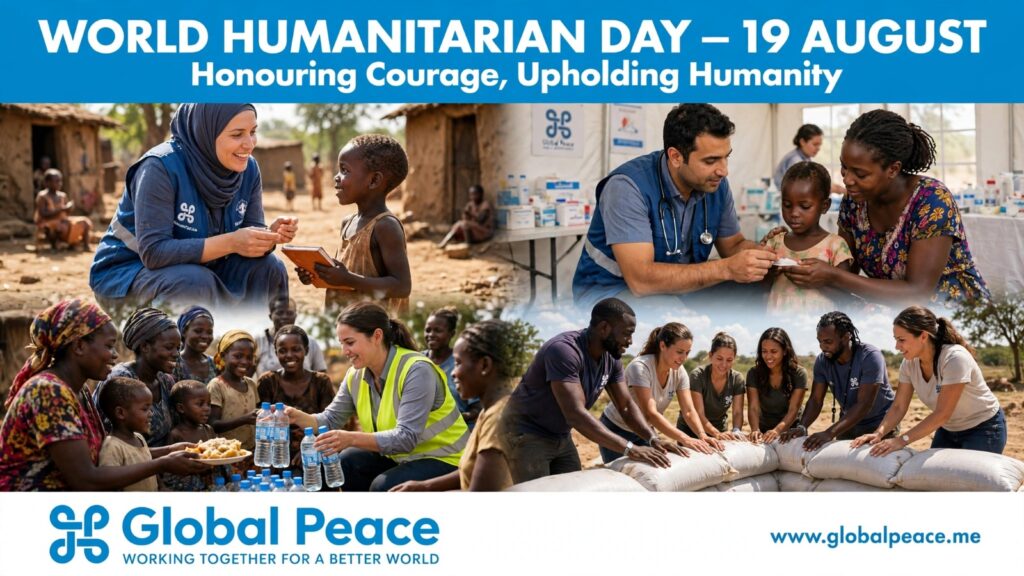
A humanitarian is not defined by a uniform, an organization, or a job title. A humanitarian is defined by a choice. It is the choice made by the aid worker who drives through active conflict zones to deliver food and medicine. It is the choice made by the local nurse who stays in a flood-ravaged village to treat the sick when everyone else is evacuating. It is the choice made by the volunteer who pulls survivors from rubble after an earthquake. It is the choice made by the ordinary person who shares their little food with a displaced neighbour.
Humanitarians operate on four core principles that are the bedrock of humanitarian action: Humanity, Neutrality, Impartiality, and Independence. They help based on need alone. They do not take sides. They do not discriminate based on race, religion, politics, or nationality. Their only agenda is to save lives and alleviate suffering.
In 2024 alone, according to the UN Office for the Coordination of Humanitarian Affairs (OCHA), over 300 humanitarian workers were killed, kidnapped, or wounded while trying to help others. This is the highest number ever recorded. The space for humanitarian work is shrinking, as conflicts become more complex and disregard for international humanitarian law grows.
From Humanitarian Action to Global Peace
At Global Peace, we believe World Humanitarian Day is deeply connected to our core mission. Humanitarian crises do not occur in a vacuum. They are the symptoms of deeper failures – failures of peace, failures of inclusive governance, failures of equitable development, and failures to protect our environment. This is the lesson we learned from our 24-year journey at ACCORD, the African Centre for the Constructive Resolution of Disputes, (www.accord.org.za) We learned that you cannot have sustainable humanitarian action without sustainable peace. You can deliver food aid to a community today, but if you do not address the conflict, climate change, poverty, and inequality that caused their hunger, you will be forced to deliver food aid again tomorrow.
Therefore, true humanitarianism is not just about responding to emergencies. It is about preventing them. It is about:
A Call to Action on 19 August
World Humanitarian Day is a call to all of us, not just aid workers. It asks three things of us:
- To remember those who died serving humanity, from Baghdad to Gaza, from Sudan to Ukraine.
1. Building Cooperation, Tolerance and Shared Values: Most humanitarian crises today are caused by conflict and intolerance. Building dialogue and social cohesion is humanitarian prevention.
2. Building Inclusive Economies: Extreme poverty and youth unemployment make communities vulnerable. An inclusive economy where everyone has opportunity is the best humanitarian shield.
3. Protecting and sustaining our Environment: Today, climate change is the biggest driver of humanitarian need. Floods, droughts, and desertification displace more people than war.
4. Sharing Knowledge for Human Progress: Quality education and access to information build resilient communities that can withstand shocks.
- To recognize the unsung heroes in our own communities in Ghana and across Africa – the teachers, health workers, community volunteers, and traditional leaders who serve daily without recognition.
- To recommit to the principle of humanity. In a world increasingly divided, choose to see the humanity in the other person.
As the late Sergio Vieira de Mello once said, “the humanitarian imperative to have the impulse to help our fellow human beings is universal.”
On this 19 August, let us honour that universal imperative by working together for a better world, where humanitarian aid is no longer needed because peace, justice, and inclusion prevail.